
In recent years, China and Central Asian countries have continued to deepen their innovative cooperation in areas such as green infrastructure, green energy, and green transportation, declaring war on desertification through technological innovation in ecological governance, serving remote areas with clean energy technology, leading the green transportation revolution with new energy vehicles, and benefiting the entire region with sustainable technology laboratories. This has added vitality and vigor to the construction of a closer China Central Asia community with a shared future.
Over two thousand years ago, Zhang Qian, a Han Dynasty envoy from China, went on a mission to the Western Regions, opening the door to friendly exchanges between China and Central Asia. The Silk Road emerged and flourished here. Today, the envoys of friendship from China and Central Asian countries are working together to promote high-quality cooperation on the “the Belt and Road” to a new direction and draw a picture of the Silk Road in a new era with beautiful scenery.
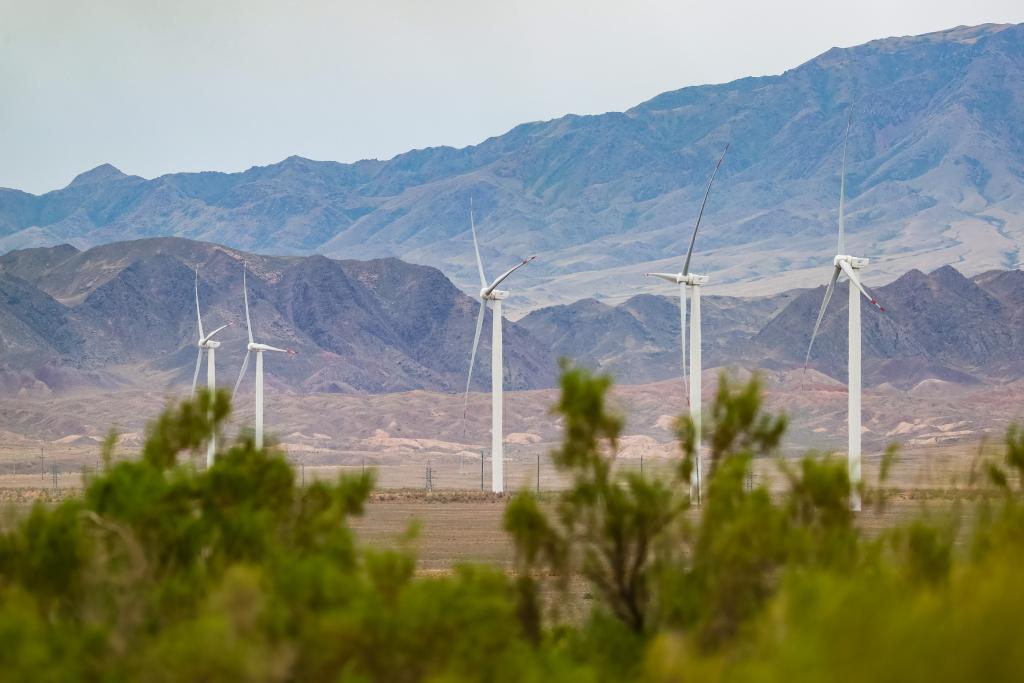
This is a wind turbine captured on June 25, 2024 at the Shelek wind farm in Almaty Oblast, Kazakhstan. This project is a landmark project of the high-quality joint construction of the “the Belt and Road” between China and Kazakhstan, and has been included in the “List of Key Projects of China Kazakhstan Capacity Cooperation”. Photo by Xinhua News Agency reporter Bai Xueqi
Bringing Green Hope to the Tears of Central Asia
At the end of May, Wang Ping, a researcher from the Xinjiang Institute of Ecology and Geography of the Chinese Academy of Sciences, arrived in Nukus, the western city of Uzbekistan, to participate in scientific research cooperation with the Aral Sea International Innovation Center of Uzbekistan. He couldn’t count how many times he had gone to this city near the Aral Sea. He and his colleagues brought two “treasures”: halophyte seeds and photovoltaic technology.
The Aral Sea is located in the hinterland of the Eurasian continent, spanning Kazakhstan and Uzbekistan, and was once the fourth largest lake in the world. Since the 1960s, under the influence of multiple factors such as the surge in water use for human activities and climate change, the Aral Sea has rapidly shrunk, with its area shrinking by more than 90%. The coastline has seriously receded, the soil salinity has increased, and a desert with an area of over 50000 square kilometers has formed on the dried up lake bed. The Aral Sea has become a lamentable “tear of Central Asia”.
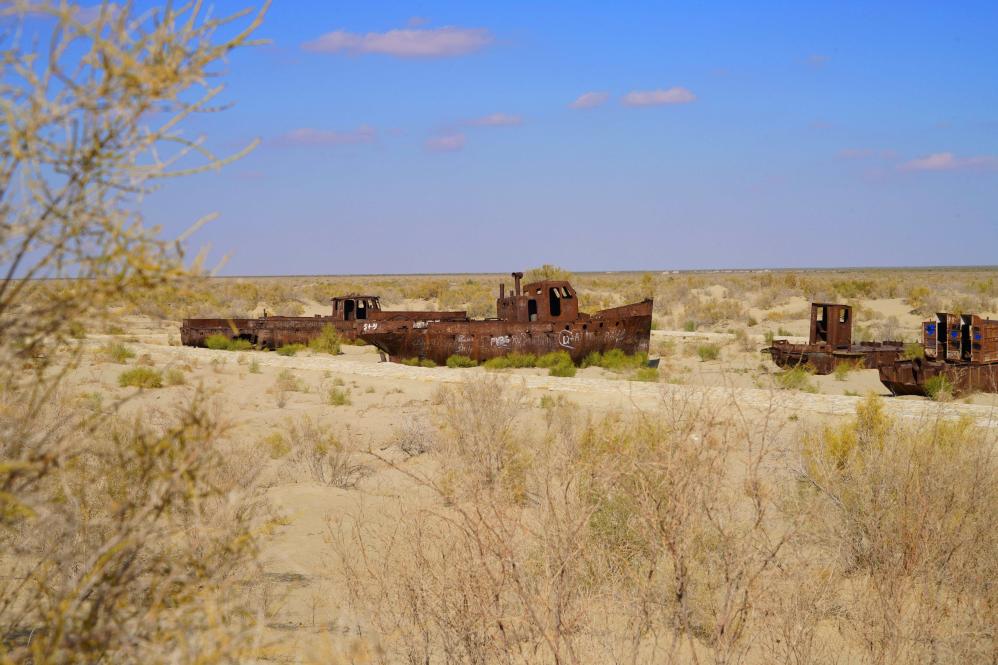
This is a photo taken on September 29, 2021 in Muyinak, Uzbekistan, of a ship stranded in the Salt Sea due to the drying up of the lake water. Xinhua News Agency (Photo by Zafar)
The ecological crisis in the Aral Sea not only causes a shortage of water resources, but also forms huge open-air rock layers at the bottom of the exposed lake, becoming a source of sandstorms and salt storms, with a wide range of impacts. The combination of desertification, salinization, and loss of biodiversity has brought a series of negative impacts on the ecology and economy of neighboring Central Asian countries.
This is a precise guide. Water shortage, soil salinization, lack of modern agricultural technology and supporting systems are urgent challenges that constrain the economic and social development of Central Asia, “said Wang Ping.
Through various forms such as joint scientific investigations, saline alkali land management, and the construction of water-saving cotton field demonstration areas, scientists from China and Uzbekistan are working together to explore solutions to the ecological crisis in the Aral Sea.
This time returning to Nukus, Wang Ping brought a batch of halophyte seeds suitable for growing in saline alkali land, including more than ten species such as halophyte, saltpeter, Haloxylon ammodendron, and gray green alkali plant. He hopes that after successful cultivation in the local laboratory, they will be widely planted around the Aral Sea, bringing new hope for the management of saline alkali land, improving biodiversity, and reducing salt storms.
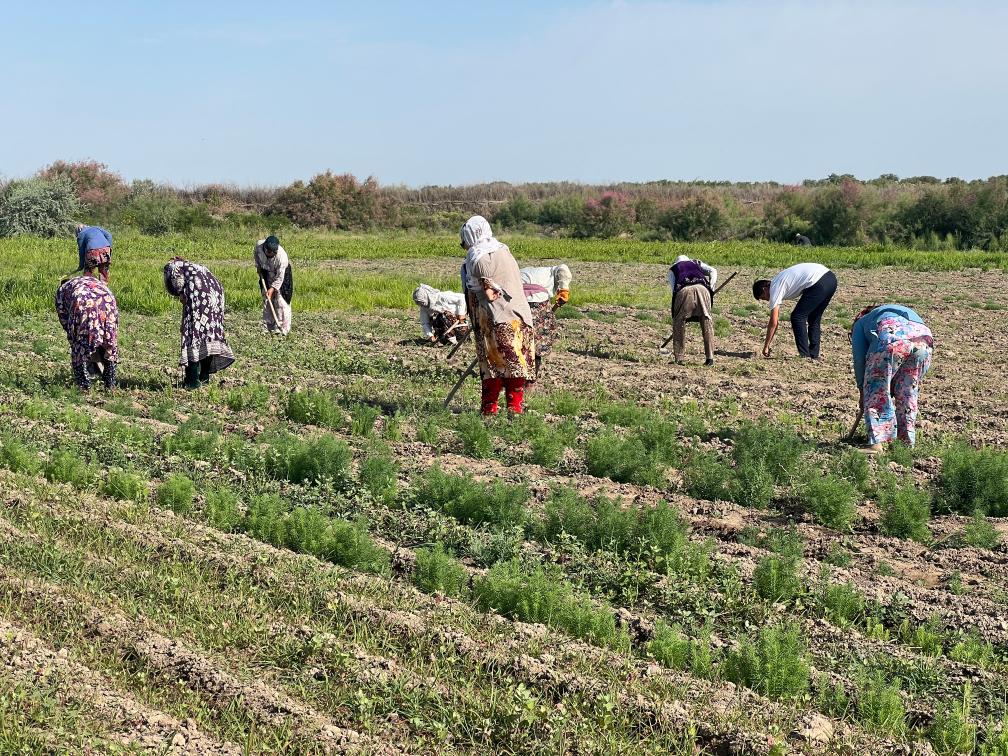
On June 3, in the experimental demonstration park of the Aral Sea International Innovation Center in Muynak Town, Uzbekistan, local farmers worked in the “photovoltaic+ecological” halophyte garden jointly built with the Xinjiang Institute of Ecology and Geography, Chinese Academy of Sciences. (Image provided by interviewee)
Wang Ping also rushed to the small town of Muyinak by the Xianhai Sea to guide the local team in setting up and using photovoltaic panels, using photovoltaic power to provide electricity for the irrigation system of halophyte cultivation. For the past two years, Chinese researchers have been promoting the integration, testing, and demonstration project of photovoltaic technology in the ecological environment governance of the Aral Sea.
Injecting New Momentum into Energy Transition
The brand new Chinese brand new energy vehicles were driven from the Khorgos port in Xinjiang, China to Kazakhstan. After acceptance, they returned to China by transnational bus. Gao Yun, a 40 year old from Khorgos, has been engaged in cross-border “whole vehicle ferry” business part-time for two years.
In the past two years, Gao Yun has two personal experiences: the customs clearance efficiency at Khorgos Port has been greatly improved, and the time for a “whole vehicle ferry” has been shortened from more than 20 hours in the past to less than 10 hours; At the same time, the proportion of new energy vehicles exported to Central Asia is constantly increasing.
I feel very meaningful to be able to personally drive Chinese new energy vehicles to Central Asia, “said Gao Yun. She is also delighted to witness Chinese brands going global and her hometown developing into an increasingly prosperous center for exporting commercial vehicles.
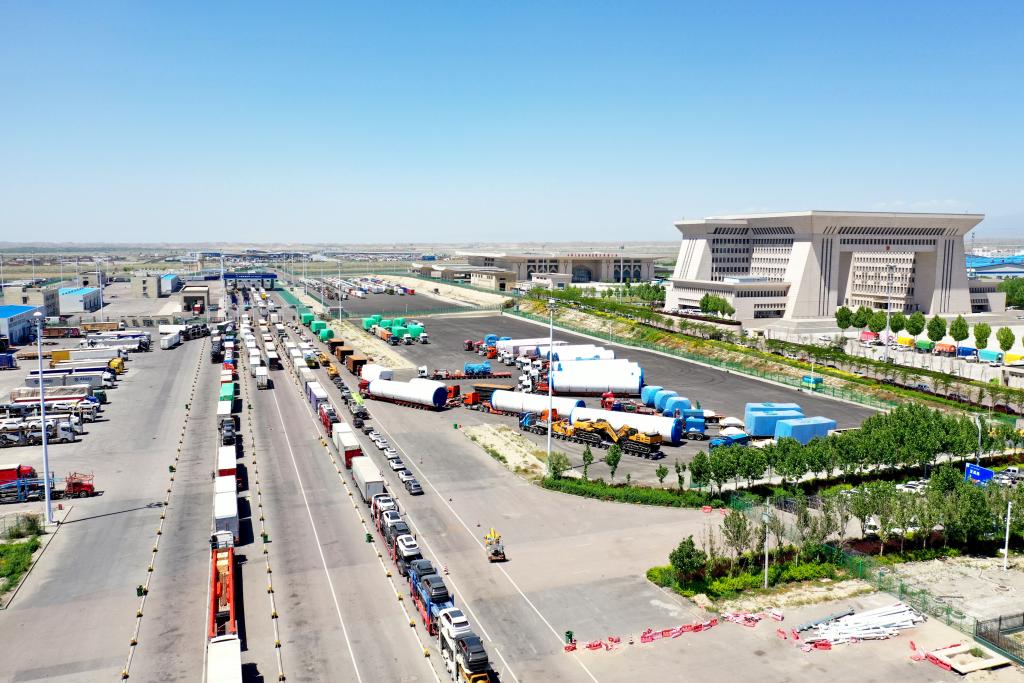
On May 16, there was a long queue of export vehicles (UAV photo) at the customs inspection site of Khorgos Highway Port. Photo by Xinhua News Agency reporter Zhang Xiaocheng
Taking advantage of the joint construction of the green “the Belt and Road”, more Chinese brand new energy vehicles have entered Central Asia, injecting new momentum into the green development of Central Asian countries, and opening a broader overseas market for Chinese enterprises.
On the streets of Dushanbe, the capital of Tajikistan, in June, electric taxis from China brought a refreshing and bright green color. The Tajikistan government has announced that all taxis in Dushanbe will be upgraded to new energy vehicles before September 1st of this year. Due to their excellent quality, local drivers have a high acceptance of Chinese brand new energy vehicles.
From new energy vehicles to clean energy projects such as photovoltaics, hydropower, and wind power, the potential for cooperation between China and Central Asian countries in the field of energy transition is constantly being unleashed.
About 75 kilometers south of Tashkent, the capital of Uzbekistan, rows of photovoltaic panels are neatly laid on the ground. This is a Buka photovoltaic project undertaken by a Chinese enterprise. After completion, it can generate over 570000 megawatt hours of electricity annually, reduce carbon emissions by 440000 tons, and is expected to significantly improve the local power supply situation, helping Uzbekistan’s energy transformation.
Local young employee Ulugbek Mamatkulov told reporters that in his heart, this project is a symbol of “friendliness, beauty, and prosperity”. He thanks Chinese experts for bringing valuable technology and experience, and colleagues from Ukraine and China are working together to turn the desert into a beautiful energy base. He also hopes to contribute to the construction of clean energy in more parts of Central Asia by using his learned technology and experience.
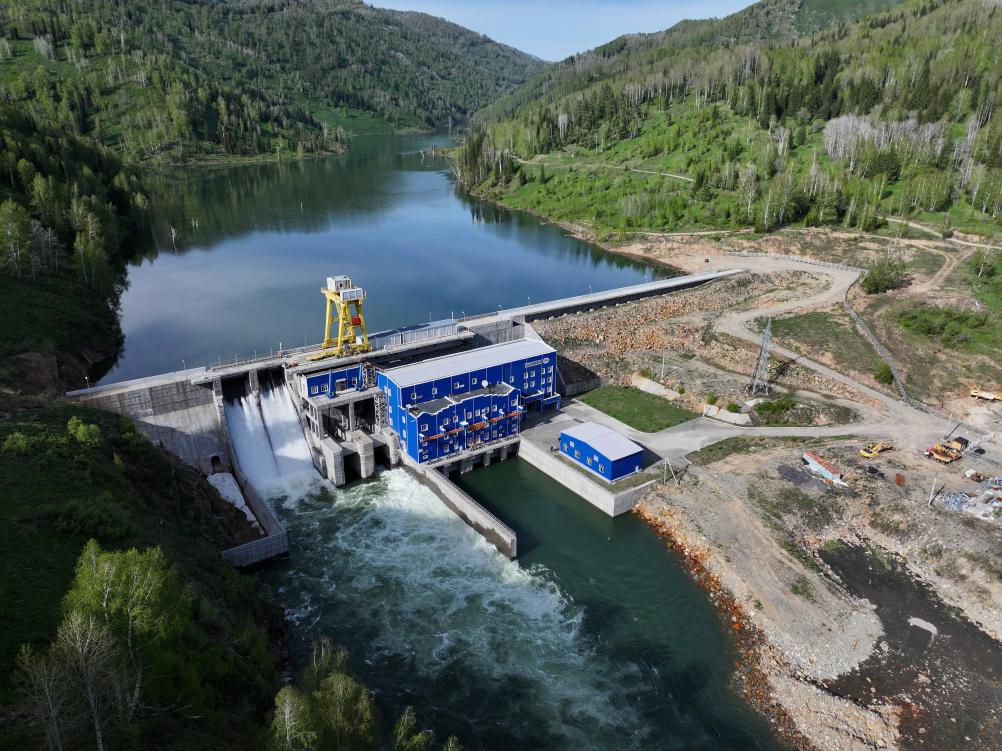
This is a drone photo of the Turgusun hydropower station taken on May 8th in the East Kazakhstan region of Kazakhstan. Photo by Xinhua News Agency reporter Li Renzi
On the banks of the Turgusun River in Kazakhstan, a hydroelectric power station stands amidst the embrace of mountains, with rushing river water pouring down from the gate on one side of the dam. This is the first key project of China Kazakhstan capacity cooperation in the field of hydropower under the framework of the joint construction of the “the Belt and Road”, with an annual average power generation of 79.8 million kilowatt hours and a reduction of 72000 tons of carbon dioxide emissions.
Building a Green Research Platform
At the beginning of this year, the Kazakhstan China Center for Science and Technology Transfer was established at the National Academy of Sciences of Kazakhstan, which is currently the most concerned sustainable development technology cooperation project by the Academy’s president, Akerbek Kurishbayev.
Kurishbayev introduced that this institution aims to build a sustainable research platform for the entire Central Asian region. “Through centralized allocation of scientific research resources, data exchange and sharing, and joint talent training, we hope to jointly address environmental and resource issues in the future and support the sustainable development of all Central Asian countries.”
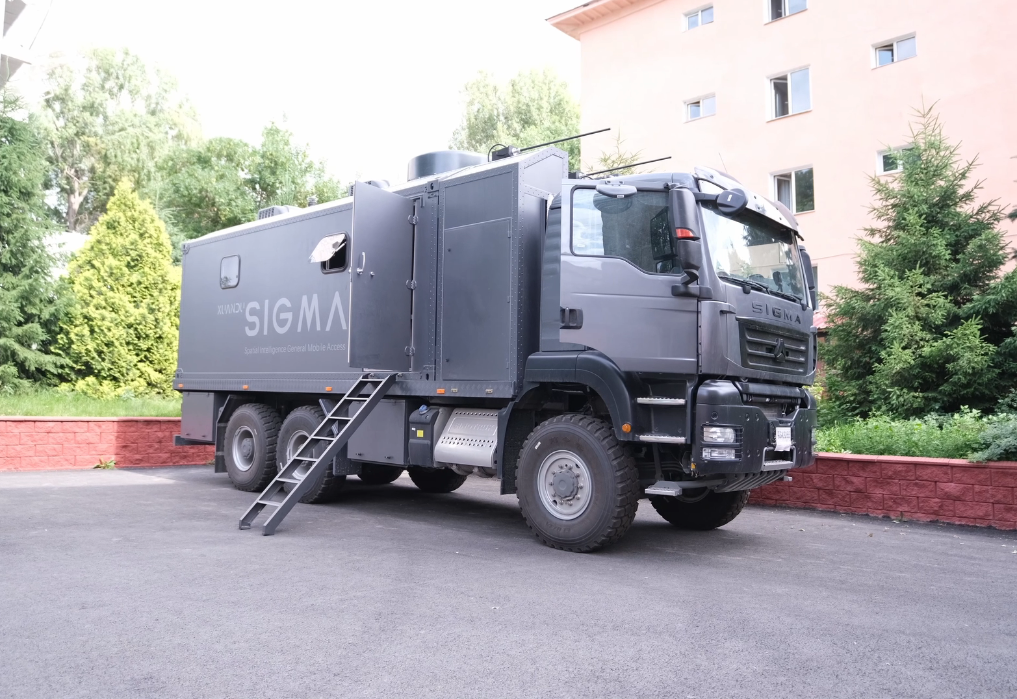
On June 2nd, the “Sigma Emergency Command Vehicle” jointly developed by China and Kazakhstan was parked on the campus of the National Agricultural Research University of Kazakhstan. Photo by Xinhua News Agency reporter Zhang Shuang
The establishment of the “China Kazakhstan Joint Laboratory for Space Time Intelligence and Sustainable Development of the the Belt and Road” is an important initiative of the organization. The joint laboratory is led by Zhejiang University of Technology in China and participated in by multiple Chinese technology companies. Duman Imamadi, the executive director of Kazakhstan, presented to reporters one of the laboratory’s achievements, the “Sigma Emergency Command Vehicle” jointly developed by China and Kazakhstan. The appearance of the command vehicle is “tall and powerful”, and it also has a “smart mind” – equipped with radar, four dispatch system servers, 3D display screens, capable of responding to emergency situations such as floods, earthquakes, landslides, avalanches, etc., achieving efficient command and precise dispatch.
In addition, the laboratory has developed multiple software and hardware products, including spatiotemporal models, flood disaster warning models, geographic ecological environment governance models, intelligent geological and mineral exploration systems, and unmanned agricultural machinery. We look forward to empowering Central Asian countries with sustainable development in areas such as artificial intelligence, aerospace information, green energy, ecological governance, and emergency response in the future.
Kurishbayev said, “It is our common aspiration and responsibility to jointly explore the path of green innovation, work together for development and revitalization, and leave a better environment for future generations
Planning: Ni Siyi, Han Mo
Lead Authors: Zhang Dailei, Zheng Yu, Li Ao
Participating journalists: Jiang Youlin, Li Renzi, Ge Chen, Zhang Jiye
Coordination: Sun Hao, Han Liang, Zhu Ruiqing, Zhang Yuan