
Xinhua News Agency, Vientiane, April 18, Xinhua News Agency, Topic: Steel Arteries Connect Mountains and Seas to Build a Dream for the Future – China Laos Railway Helps Regional Development Observation
At 11:25 am local time on the 18th, the D84 international passenger train left Vientiane Station and ran along the 1035 km China Laos railway line to Kunming, China.
Since it was opened to traffic in December 2021, this “Iron and Steel Silk Road” has been deeply integrated into the economic and social development context of China and Laos, becoming a vivid practice of high-quality joint construction of the “the Belt and Road”, and continuing to release the strong momentum of the “Golden Corridor”.
Prosperous passenger transportation, building a new pattern of cultural exchange
It’s too convenient to take the train to China now. You can have coffee in Vientiane in the morning and have rice noodles in Kunming in the evening, “said Lao tour guide Kampung Sulifeng with a smile. Most of the Chinese tour groups he received this year chose to travel across the border by taking the China Laos railway train.
Data shows that as of April this year, the cumulative number of cross-border passengers sent by China Laos Railway has exceeded 800000. During the Chinese Spring Festival this year alone, the China Laos railway has sent 12900 cross-border passengers, a sharp increase of 41.8% over the same period last year. “Cross border travel by train” has become a new fashion in regional tourism.
The “railway+tourism” model has effectively driven the local economic and social development. Laos National Radio reported that the China Laos railway cross-border trains connect many tourist attractions, such as Kunming, Xishuangbanna, Luang Prabang, Vang Vieng and so on, becoming the golden route for cross-border tourism.
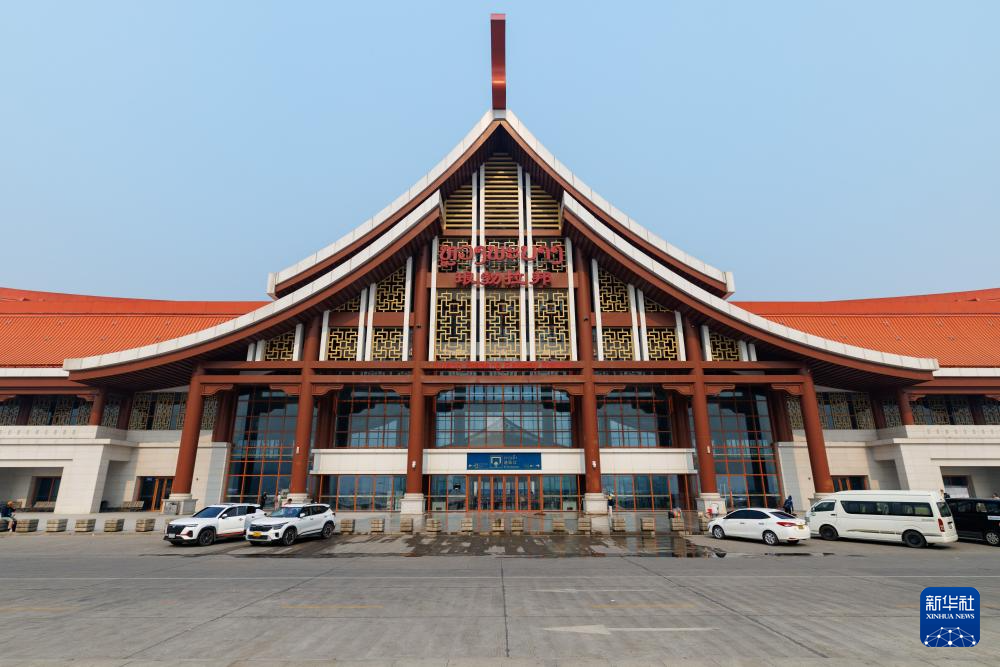 This is the Luang Prabang Station of the China Laos Railway on April 16. Photo by Xinhua News Agency reporter Chen Yichen
As the station with the largest passenger traffic volume in Laos section of the China Laos Railway, Luang Prabang Station combines the “human” shaped roof of Xiangtong Temple in Laos, the palace museum and Buddhist elements, with cultural characteristics. Yin Zhaoliang, the head of the station, said: “Since the opening of the China Laos railway, the number of hotels in Luang Prabang has more than tripled, and this year will add 7000 rooms. There are more than 400 minibuses, 10 buses, and more than 500 drivers who rely on the station to pick up passengers every day.”
Smooth logistics, promoting new upgrading of regional trade
At the cargo yard of Wanxiang South Station in the early morning, the crane is busy and non-stop. As the only single freight station and the largest freight hub of the Laos section of the China Laos Railway, it has witnessed the vigorous development of regional trade. April to August is the peak season for fruits every year, with two to three fruit trains running every day. This year, 903 trains and 17000 tons of fresh fruits have been shipped, “said Wang Guoquan, the station manager of Wanxiang South Station.
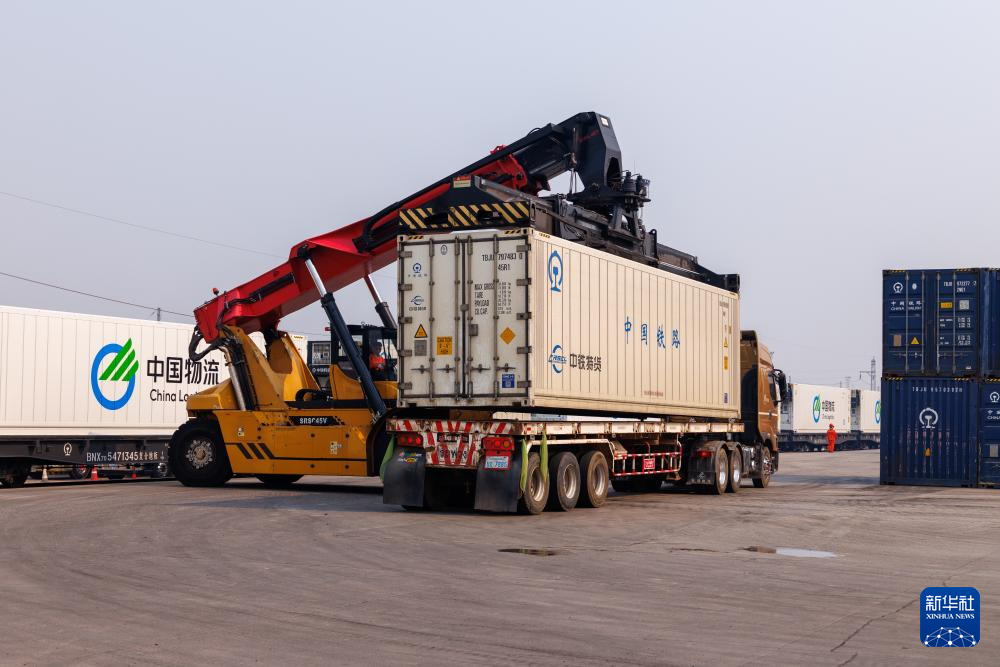 On April 17, in Vientiane, the capital of Laos, a container front crane operated in the freight yard of Vientiane South Station of China Laos Railway. Photo by Xinhua News Agency reporter Chen Yichen
The latest statistics show that as of April this year, the China Laos Railway has operated a total of 21000 cross-border freight trains, with a freight volume of more than 18.6 million tons. The categories of goods have expanded to more than 3800, covering 31 provinces (regions and cities) in China and countries and regions such as Laos, Thailand and Vietnam. In the first quarter of this year, the import and export value of China Laos railway reached 6.81 billion yuan, up 62.7% year on year.
At the Vientiane South Station interchange yard, located 3.9 kilometers away, the standard gauge and meter gauge container interchange operations are efficiently carried out. Since its operation in July 2022, the transshipment yard of Vientiane South Railway Station has replaced 29000 boxes and 326000 tons of goods, realizing the seamless connection between China Laos Railway and Thailand Railway. The railway transportation from Kunming, China to Linchaban Port in Thailand is faster and more reliable than traditional sea transportation, “said a Thai logistics company manager.
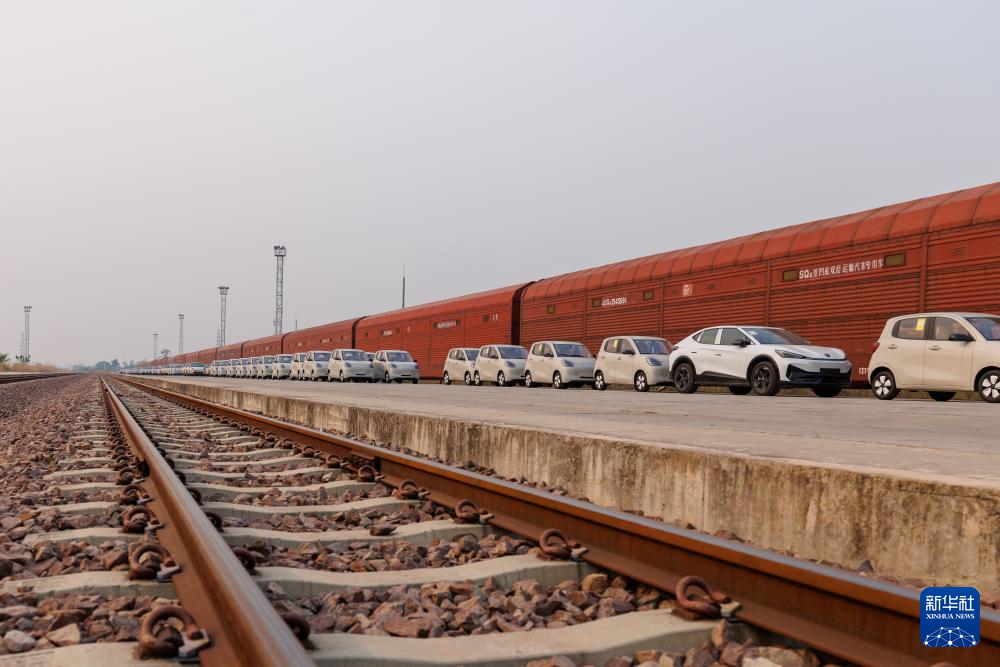 This is the changing yard of Vientiane South Station of the China Laos Railway on April 17. Photo by Xinhua News Agency reporter Chen Yichen
It is worth noting that the structure of railway transportation of goods is undergoing profound changes. In the first quarter of this year, the export of “new three types” represented by photovoltaic products and new energy vehicles surged 10.4 times year-on-year, with the growth rate of photovoltaic products reaching 43.2 times. China Laos Railway is transforming and upgrading from a “resource channel” to a diversified “industrial synergy corridor”.
Technological integration, cultivating new local forces
In the maintenance workshop of Vientiane locomotive and vehicle operation, 28 year old Laotian locomotive fitter Peng Pimeng Mengzhandi is carefully inspecting the components of the high-speed train. As one of the first female locomotive fitters in Laos, she has proficiently mastered various maintenance skills. The Chinese master taught me not only skills, but also a rigorous and meticulous work attitude, “said Peng Pimeng. This job allowed her to support her sister’s college education and significantly improve her family life.
Growth stories like Peng Peimeng are constantly emerging along the China Laos railway. Laotian train driver Songsai Lao Liu is now able to independently drive international trains. Although he is separated from his Chinese master by two places, he often communicates through mobile phones. I want to pass on the skills I have learned to more young people in Laos, “said Song Sai.
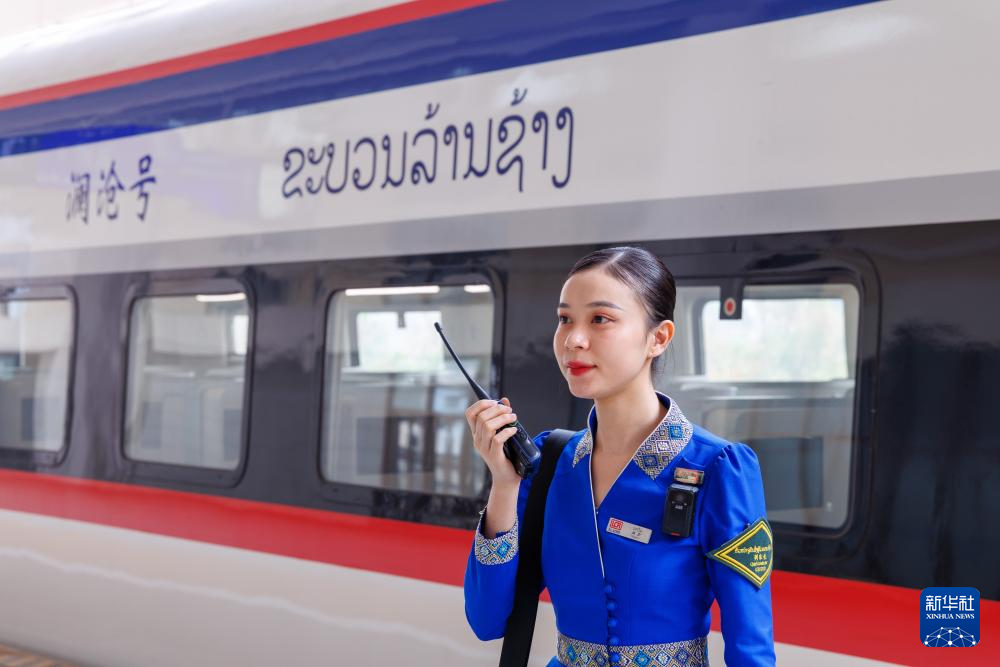 On April 17, the conductor Mu Xi worked on the platform of Luang Prabang Station of China Laos Railway. Photo by Xinhua News Agency reporter Chen Yichen
According to He Linxian, Director of the Vientiane Operations Management Center, Chinese technical experts have trained a group of professional technical talents for Laos through the “mentorship” model. Currently, 780 Laotian employees have achieved independent employment, 32 Laotian drivers have obtained driver’s licenses, and 24 Laotian employees have taken up management positions.
We have established a 1+N technical regulatory system that is in line with the actual situation in Laos and formulated the first railway technical standards in Laos. ”He Linxian said that the localization of talents and technical standards is an important guarantee for the sustainable development of China Laos railway.
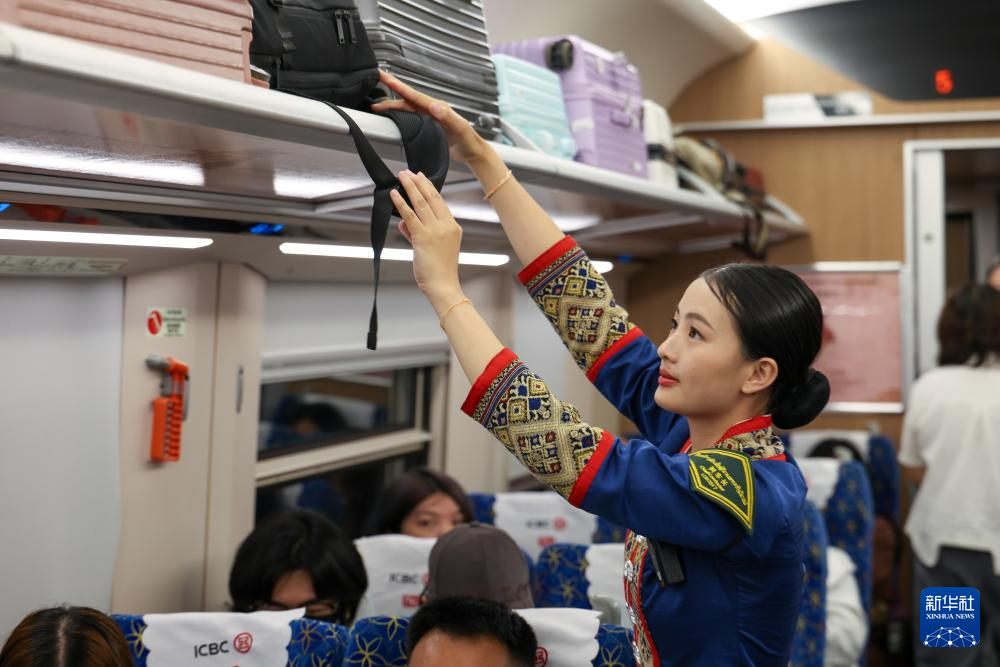 On April 15, conductor Guo Moli worked on the D87 China Laos Railway International Passenger Train. Photo by Xinhua News Agency reporter Chen Yichen
From people to people exchanges to trade upgrading, from technology transfer to standard co construction, the China Laos railway crosses mountains and seas and connects people’s hearts. On the journey of building a community with a shared future for China and Laos, a series of “Fuxing” and “Lancang” ships are following this steel artery, heading towards a better future of common prosperity.